Designing for Well-being: How Office Interiors Influence Mental Health
Office interiors play a significant role in employees’ mental health, impacting everything from stress levels to job satisfaction and overall well-being. Thoughtful design elements can help create an environment that fosters positivity, reduces stress, and promotes mental health. Here’s a look at how interior design influences mental well-being in the workplace and some key design strategies to support mental health.
1. Access to Natural Light
- Exposure to natural light helps regulate circadian rhythms, which play a critical role in sleep quality, mood, and overall mental health. Studies show that employees who work near windows experience lower stress, better mood, and higher satisfaction. When natural light isn’t feasible, using lighting that mimics daylight can help create a balanced and uplifting environment.
2. Biophilic Design Elements
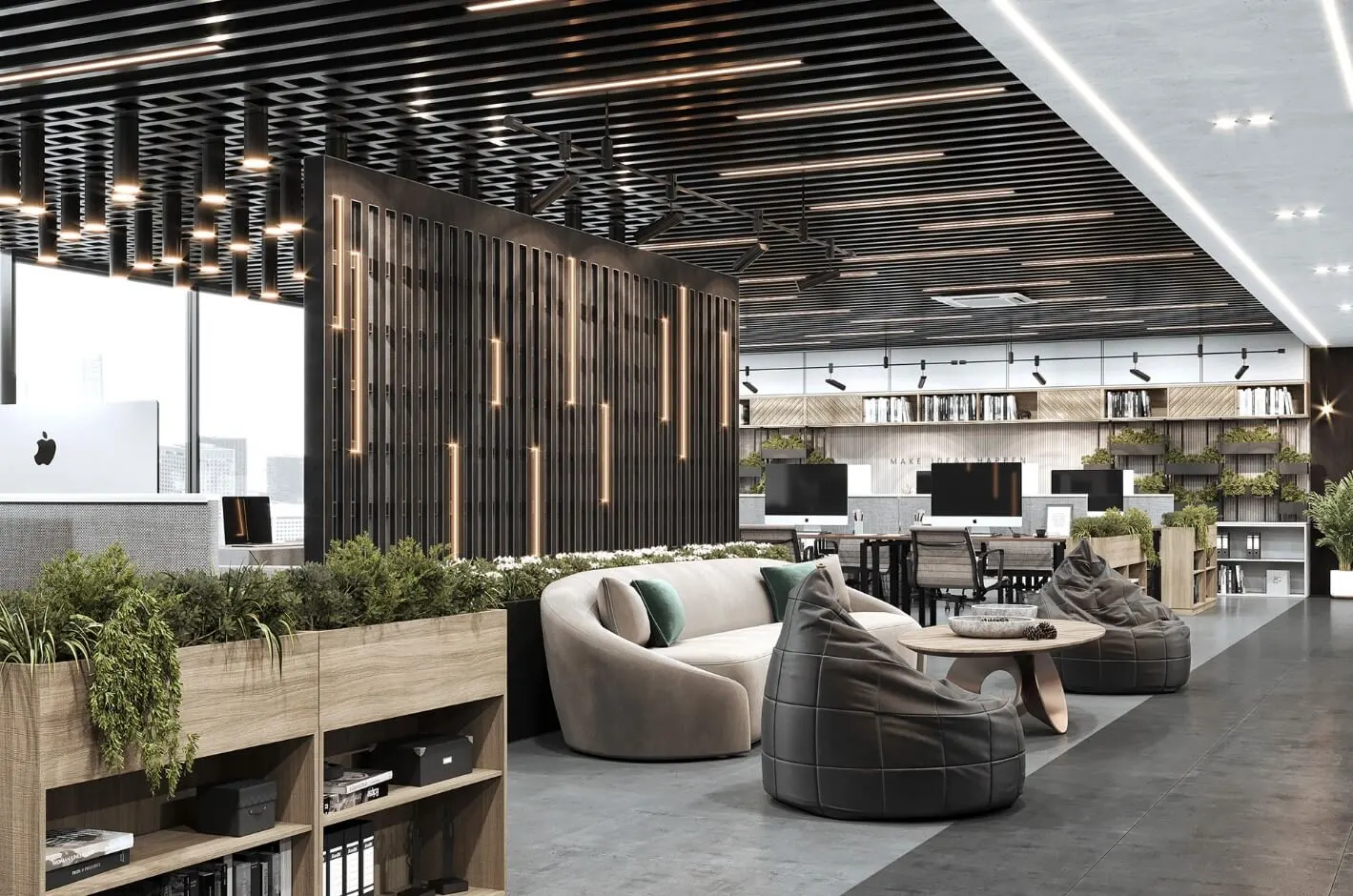
- Incorporating elements of nature, known as biophilic design, has been shown to reduce stress and anxiety, improve cognitive function, and increase a sense of well-being. Plants, green walls, natural materials like wood and stone, and even nature-inspired colors and textures can bring a calming, grounding effect to the workspace, helping employees feel more relaxed and focused.
3. Flexible and Comfortable Furniture
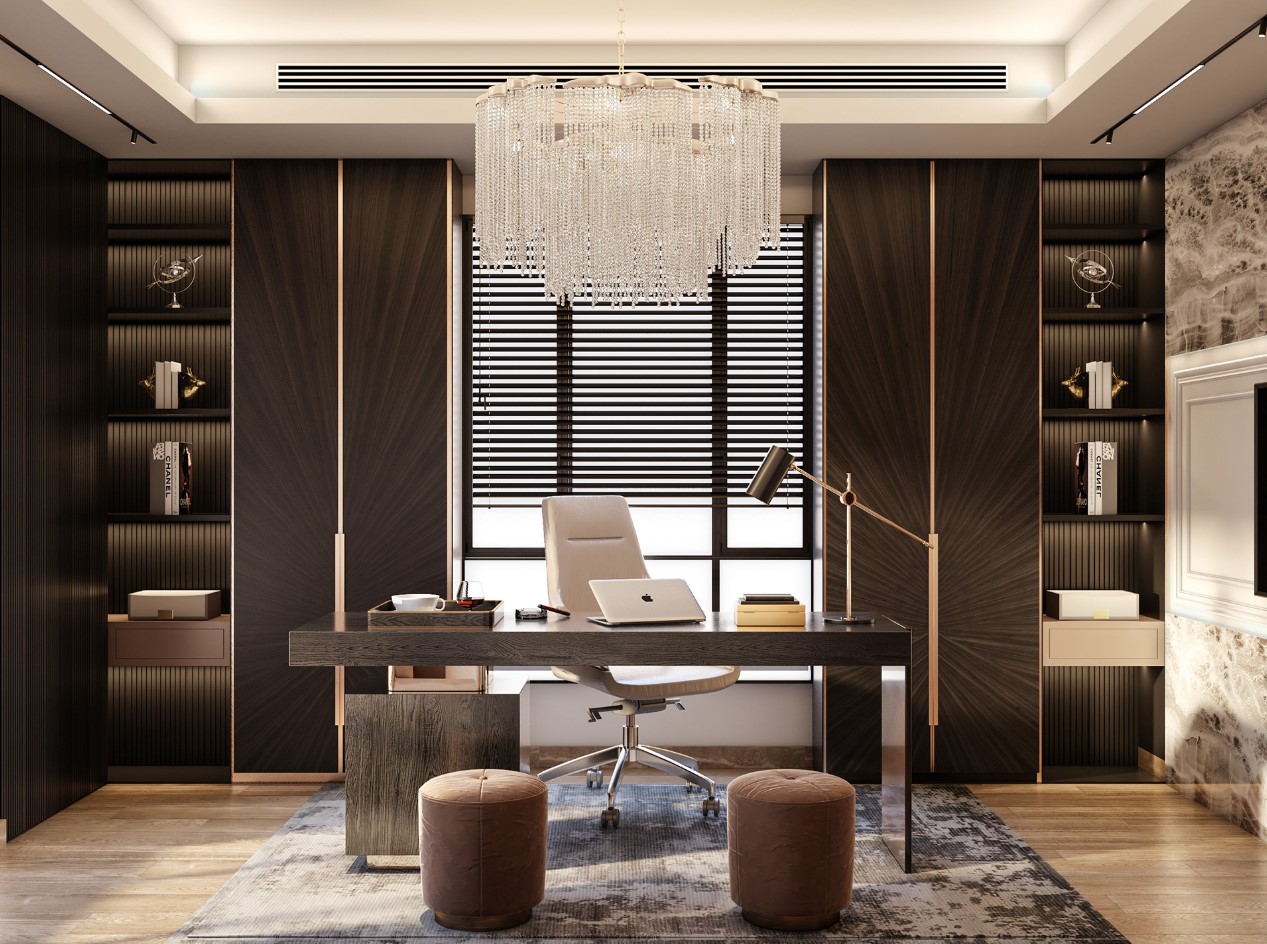
- Ergonomic furniture that supports good posture and comfort can reduce physical stress, leading to better focus and mental clarity. Flexible furniture, such as adjustable desks, comfortable seating, and spaces that support different work styles (collaborative areas, quiet zones, etc.), allows employees to work in environments that suit their preferences and needs, enhancing mental well-being.
4. Personalization and Privacy Options
- The ability to personalize one’s workspace—adding personal items, decor, or photos—helps employees feel more comfortable and connected to their environment. Additionally, privacy options, like quiet rooms or secluded workstations, provide employees with spaces to recharge or focus without distractions. The choice between open and private spaces allows employees to manage their work environment based on their mental and emotional needs.
5. Color Psychology
- Colors significantly influence mood and mental health. Soothing colors like blues and greens create a calming effect, while warmer colors like yellows and oranges can evoke feelings of warmth and positivity. Neutral tones can reduce visual stress, while accent colors add vibrancy without overstimulation. Choosing a color scheme that aligns with the company culture and work style can help foster a positive emotional response.
6. Noise Reduction and Acoustic Design
- Noise can be a significant stressor in the workplace, particularly in open-office environments. Incorporating sound-absorbing materials like acoustic panels, carpeting, and soft furnishings can reduce noise levels and help employees concentrate. Creating designated quiet zones or implementing white noise machines are also effective ways to manage noise and reduce distractions, supporting a calm and focused workspace.
7. Social Spaces to Foster Connection
- Spaces designed for social interaction, such as lounges, break rooms, and collaboration zones, provide employees with opportunities to connect, relax, and recharge. These areas encourage interaction and can reduce feelings of isolation, helping to create a supportive community within the office. Social spaces also give employees a mental break from their work, which can reduce stress and improve mood.
8. Incorporating Movement
- Sitting for prolonged periods can negatively impact both physical and mental health. Incorporating design elements that encourage movement—such as standing desks, open staircases, or designated walking paths—promotes physical activity, which is linked to better mood and mental clarity. Providing a variety of work areas allows employees to move around throughout the day, reducing stress and boosting creativity.
9. Mindfulness and Relaxation Areas
- Mindfulness rooms or relaxation areas give employees a dedicated space to unwind, meditate, or practice mindfulness exercises. These areas can be designed with calming elements, such as soft lighting, comfortable seating, and minimal decor, to promote relaxation. Having a quiet, comfortable area to step away from work can reduce stress and help employees feel more balanced.
10. Smart Technology for Comfort Control
- Smart office technology allows employees to personalize lighting, temperature, and even air quality based on their preferences. Maintaining a comfortable and adaptable environment helps reduce physical discomfort, which can contribute to mental well-being. Technology-driven solutions like automated lighting, climate control, and air purifiers ensure a healthy and supportive work environment.
Designing for Well-being: Key Takeaways
A well-designed office isn’t just about aesthetics—it’s about creating an environment that supports employees’ mental health and well-being. By prioritizing natural light, integrating biophilic elements, providing flexible and ergonomic furniture, and incorporating mindful spaces, office interiors can help reduce stress, promote happiness, and improve productivity. A workplace that nurtures mental health benefits not only employees but also the organization, as happier, healthier employees are more engaged, creative, and productive. Thoughtful design truly makes the workplace a place of well-being.


Related Posts
Small Business, Big Impact: Smart Interior Design for Small Commercial Spaces